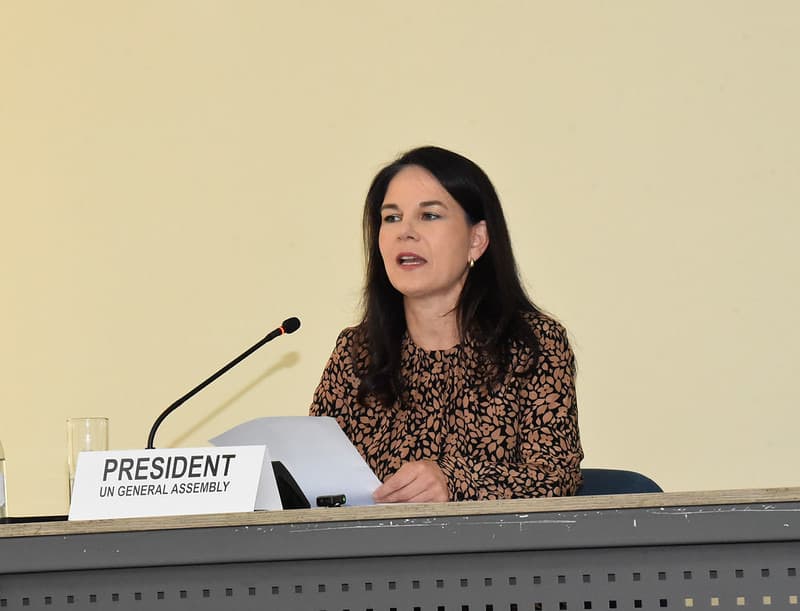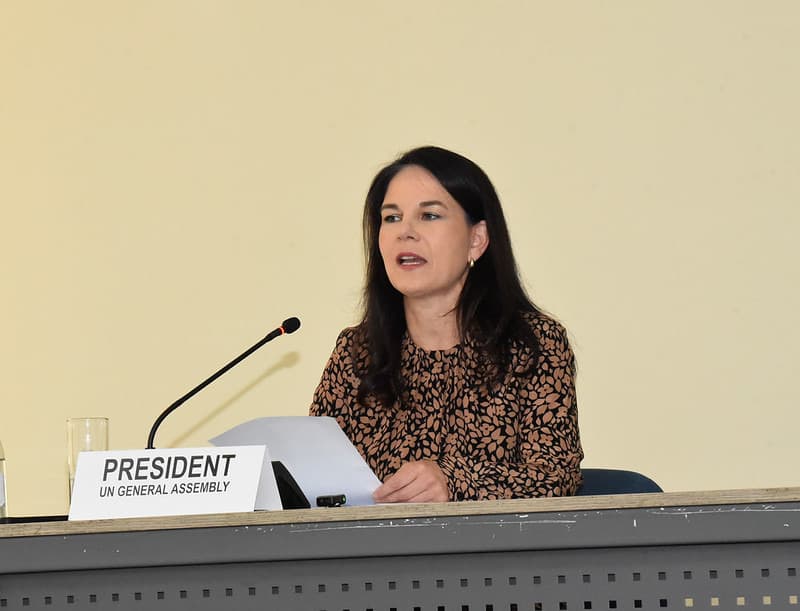
Dateline: NAIROBI – June 10, 2026NAIROBI
The United Nations is facing a "deep liquidity crisis" that is threatening peacekeeping operations, food programs, and baby nutrition initiatives worldwide, the President of the UN General Assembly, H.E. Annalena Baerbock, warned today.
Speaking to journalists following a formal press conference at the UN Office in Nairobi, President Baerbock did not hold back in describing the severity of the organization's financial predicament.
"We should not sugarcoat the situation," Baerbock said. "The UN is in a deep liquidity crisis."
The crisis, she explained, is being worsened by what she called a "counterproductive rule" within the UN budget system. Currently, unspent funds must be redistributed to member states – including money that was never collected because some countries failed to pay their assessed contributions.
"The UN has to pay back money which it never received," she said bluntly.
While her official prepared remarks focused on the UN80 reform initiative and Africa's growing role, her responses to journalists' questions revealed a far more urgent reality. Secretary-General António Guterres rang the alarm bell earlier this year, she recalled, calling on all 193 member states to pay their dues "in full and on time."
The consequences of non-payment, Baerbock warned, are no longer bureaucratic – they are lethal.
"People are literally starving if we have these heavy cuts on the food program, especially for baby nutrition," she said. She emphasized that development aid, human rights work, and peace and security are "deeply interconnected."
She pointed to a glaring contradiction: many member states that demand a stronger UN role in peace and security are simultaneously undermining the very machinery that makes peacekeeping possible.
"If you call for a stronger role for peace and security of the UN, you cannot sacrifice the most important task, especially of peacekeeping, by not paying your contributions," she said.
President Baerbock revealed that she has submitted a proposal to the UN's Fifth Committee to change the "counterproductive rule" that forces the return of uncollected funds. However, any change requires consensus among member states – a difficult prospect given current geopolitical tensions.
She also noted that the departure of several major donors from UN agencies has had a devastating ripple effect on voluntary funding streams, including the World Food Programme and UNICEF.
"The cuts are devastating," she said. "And again, it is counterproductive with regard to stabilization and peace and security."
Baerbock made clear that paying UN dues is not optional but a legal obligation under the UN Charter.
"Paying your contribution is not optional," she said. "It is an obligation by every member state."
She praised Kenya for maintaining its contributions – "Kenya has paid more than 100 percent as well" – but stressed that the crisis requires all nations to step up.
The President's warning comes as the UN simultaneously manages active conflicts in Gaza, Lebanon, Sudan, and Ukraine, while pushing forward with the "Pact for the Future" and the 2030 Sustainable Development Goals. Without reliable funding, Baerbock suggested, those ambitions will remain unfulfilled.
"We need the spirit of delivering, not just preaching," she said. "Reform is not a cost-cutting exercise. It is about enabling the United Nations to deliver better for the people it serves."