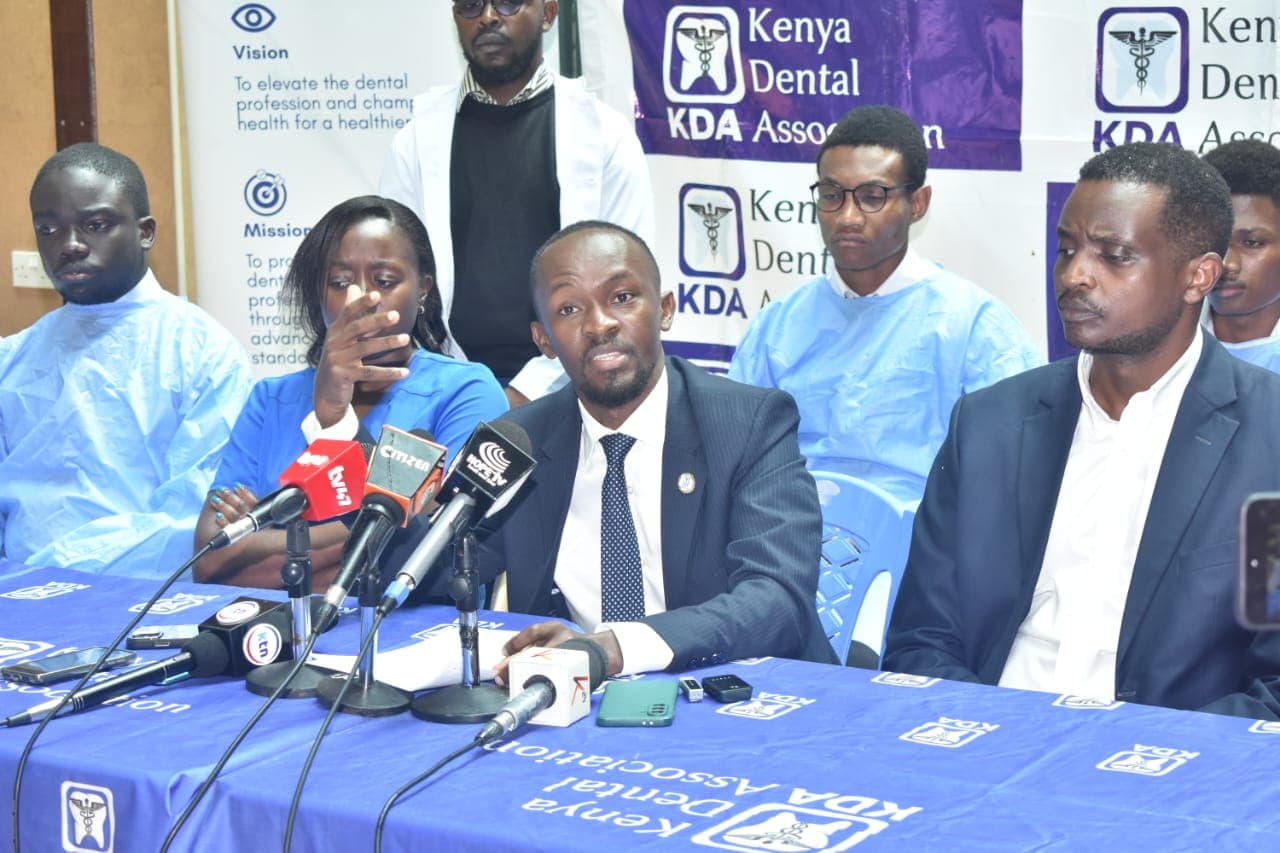
NAIROBI, Kenya, June 9, 2026 – The Kenya Dental Association (KDA) on Tuesday issued a sharp warning against the growing trend of unregulated healthcare training programmes, saying the country risks a crisis of patient safety, professional standards, and public confidence unless regulators act decisively.
In a press briefing held at its 5th Avenue Office Suites headquarters along Ngong Road, the KDA singled out the continued accreditation of the Bachelor of Science in Oral Health degree as a prime example of a programme that, in its current form, fails to align with Kenya’s established competency frameworks and scope of practice for dental healthcare delivery.
“Kenya cannot afford a situation where healthcare training standards are compromised at the expense of patient safety,” the Association said in a detailed statement released to media houses. “The country risks a future marked by declining healthcare quality, erosion of public confidence in health professionals, and preventable harm to patients.”
The KDA accused some training institutions of introducing professional healthcare courses through irregular processes, without proper curriculum validation, regulatory oversight, or adequate clinical training standards. It described such programmes as “backdoor healthcare training pathways” that threaten to undo decades of progress in health education and regulation.
Students enrolled in unapproved or questionable programmes face particularly harsh consequences, the KDA noted, including ineligibility for professional registration and licensure, rejection of their qualifications by employers and regulatory boards, and expensive retraining or bridging requirements. Parents and sponsors, the Association added, similarly suffer financial losses when they invest in degrees that may never receive professional recognition.
But the greatest risk, the KDA emphasised, falls on patients.
“Training programmes that lack proper accreditation, adequate clinical exposure, qualified faculty, and standardised competency assessments may produce graduates with critical deficiencies in knowledge, skills, and professional judgment,” the statement read. “This inevitably compromises the quality of healthcare services and undermines patient safety.”
The Association called on the Ministry of Health, the Ministry of Education, the Commission for University Education, and all professional regulatory councils to urgently investigate any healthcare training programmes whose accreditation, clinical training arrangements, and professional recognition remain unclear or questionable.
Among the KDA’s specific demands to regulators:
· Strengthen inter-agency coordination in approving healthcare training programmes.
· Ensure meaningful consultation with statutory professional bodies before any health-related courses are approved.
· Publish clear guidance on approved healthcare programmes and institutions.
· Conduct regular compliance audits of institutions offering professional healthcare training.
· Take prompt enforcement action against institutions operating outside legal and regulatory frameworks.
“The time for decisive regulatory action is now,” the KDA warned. “We urge the Ministry of Health and the Ministry of Education to address this growing challenge before we descend into a crisis of healthcare quality, professional standards, and patient safety.”
The Association reaffirmed that patient safety, professional integrity, and public confidence in healthcare must remain paramount.