Kenya Power has called for tighter moderation of variable renewable energy (VRE) sources, particularly wind and solar, warning that their intermittency is putting pressure on the stability, reliability and cost of electricity supplied to consumers.
In a press release issued on Tuesday, August 11, 2026, the utility said VRE sources currently account for 34 per cent of Kenya’s energy mix during the daytime peak demand of 1,900 megawatts (MW) and 36 per cent during the low-load demand of 1,200MW.
Kenya Power said the high contribution exposes the national grid to vulnerability when wind and solar generation suddenly rises or falls, requiring other generation sources to be brought online to compensate for the fluctuations.
“The intermittency of VREs (wind and solar) affects the reliability and quality of power supply due to their impact on frequency and voltage of the power supplied,” the company said.
The utility urged stakeholders to prioritise grid stability and the costs associated with integrating variable renewable sources when adding new generation capacity.
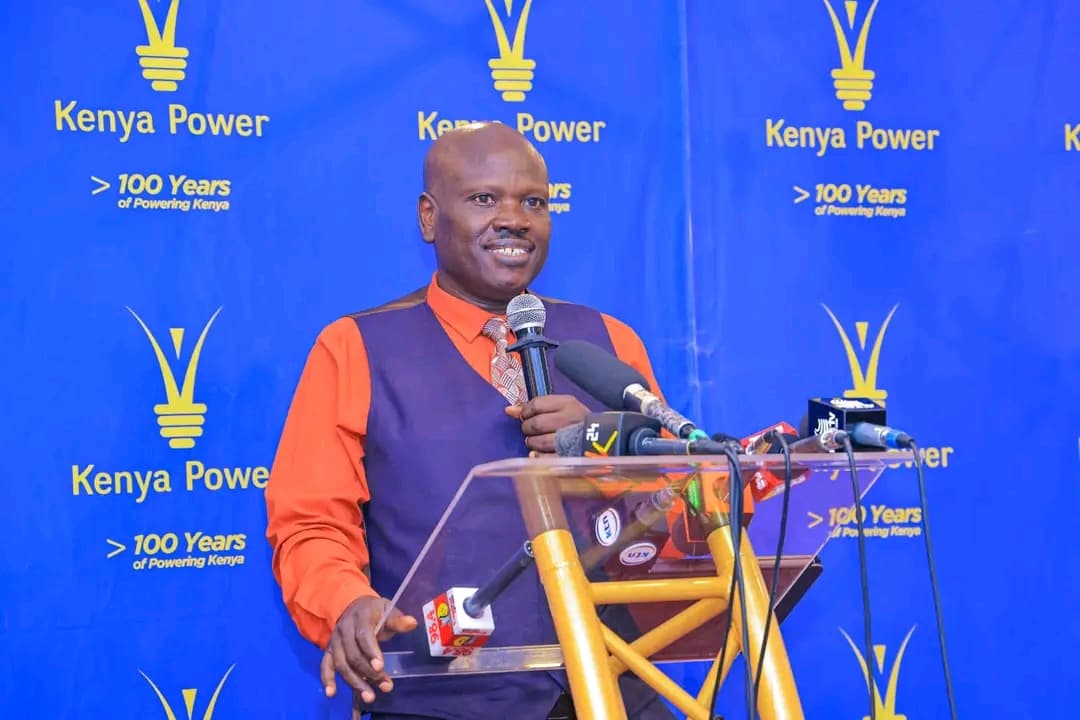
Kenya Power Managing Director and Chief Executive Officer Dr. Joseph Siror said global benchmarks point to a limit of about 15 per cent of a grid’s total firm capacity for variable renewable energy.
He noted that Kenya's current system, which operates under a take-or-pay model for power purchases, has contributed to an increase in VRE capacity to more than 20 per cent, above the recommended average.
“Given the intermittent nature of wind and solar, we have no option but to dispatch and pay for generators, increasing the overall cost of power,” Siror said.
Kenya Power said it currently dispatches additional generation plants at extra cost whenever wind and solar output suddenly declines or increases, a measure it says is necessary to prevent grid instability.
The additional costs are ultimately passed on to electricity consumers, according to the utility.
Siror said battery energy storage systems have been proposed as one way of addressing the intermittency challenge, but warned that such systems would introduce additional costs.
“For VREs, the recommendation is to have battery storage systems. However, they would still face a challenge in charging the batteries when the wind and solar dip,” he said.
Kenya Power said increasing the contribution of geothermal, hydro and other firm generation sources could help strengthen the grid and provide greater stability when intermittent renewable sources are unavailable.
The company noted that Kenya has one of the highest levels of dependence on variable renewable energy in the region. It cited figures showing that VREs account for 10.4 per cent of Kenya's installed capacity in the Eastern Africa Power Pool, compared with 5.3 per cent in Ethiopia, four per cent in Uganda and 1.2 per cent in Tanzania.
Kenya's current baseload generation consists largely of geothermal, hydro, power imports and thermal generation, which Kenya Power said account for about 80 per cent of the country's energy mix.
The utility is also anticipating additional baseload capacity from several projects.
These include KenGen's Olkaria I additional 61MW, KenGen Olkaria VII 80MW, Globeleq Menengai 35MW, OrPower 22 Menengai 35MW, 200MW of electricity imports from Ethiopia, Paka Silali's 100MW geothermal project and Nayaburu's 28MW project.
Kenya Power also said plans to lower energy losses by 1.5 percentage points are expected to increase annual energy generation output by 83GWh.
Other baseload projects in the pipeline include the proposed LNG power plant, expected to generate 300MW, the High Grand Falls project with a planned capacity of 700MW, and Karura Falls, which is expected to produce 90MW.
The developments come as Kenya continues to expand renewable energy generation while seeking to maintain a stable and affordable electricity supply.