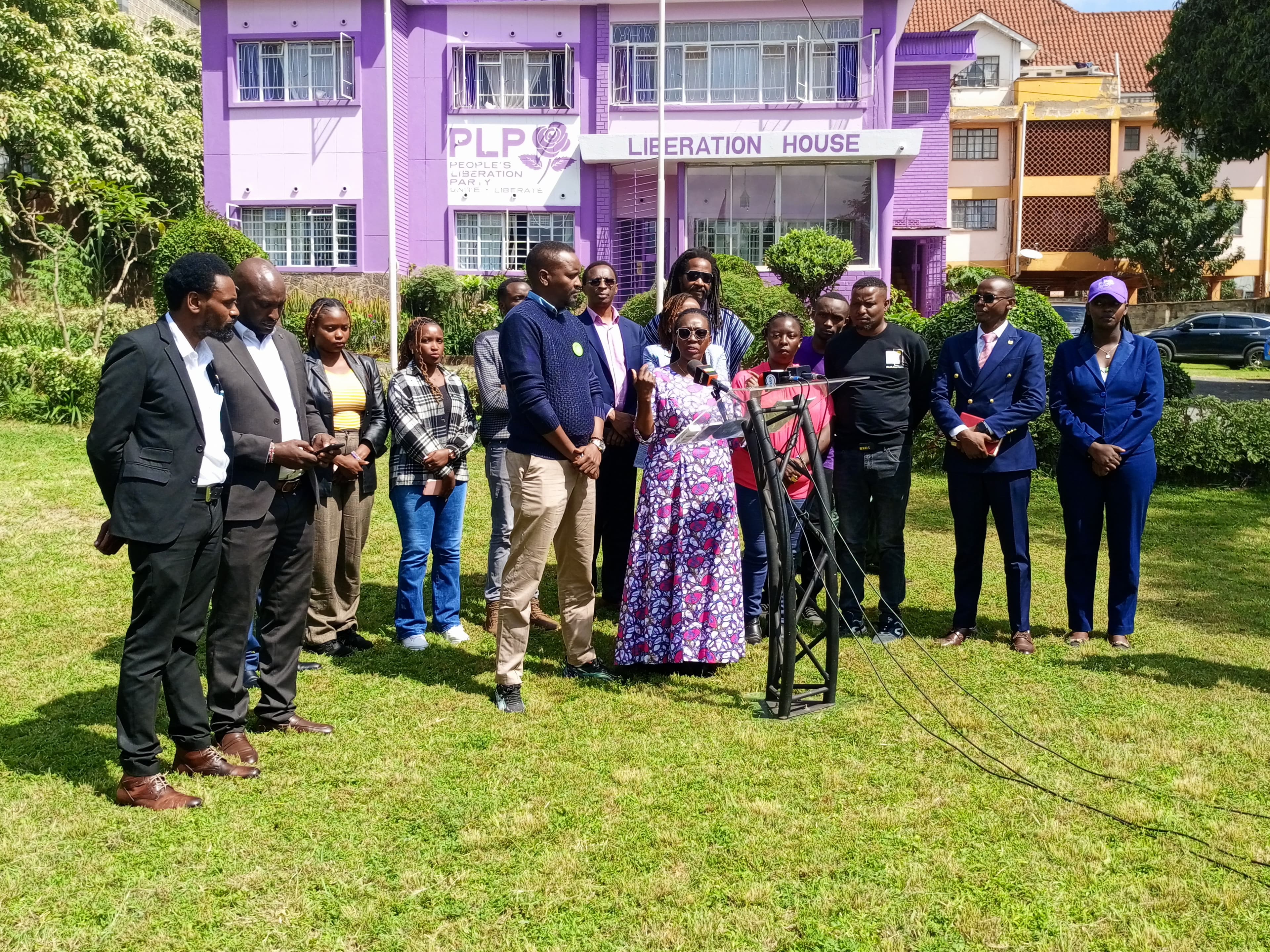
Nairobi, June 8, 2026 — People's Liberation Party (PLP) leader Martha Karua has proposed what she termed a "Rescue Budget," positioning it as a people-centered alternative to the Kenya Kwanza government's draft budget.
Speaking during a press briefing, Karua argued that Kenya's economic challenges stem not from a lack of revenue but from poor leadership, corruption, wasteful spending, and lack of accountability in the management of public resources.
Karua said Kenyans continue to bear a heavy tax burden while receiving inadequate public services. She accused the government of prioritizing luxury spending, excessive travel, and political patronage at the expense of critical sectors such as education and healthcare.
"The problem is not the absence of money. The problem is the absence of accountability," Karua said.
The PLP leader cited stalled public projects and alleged fiscal indiscipline as evidence that public funds are not being utilized effectively. She maintained that the government lacks the moral authority to impose additional taxes without first accounting for existing resources.
Karua also expressed solidarity with young Kenyans who have been calling for accountability, transparency, and economic justice. Referring to the Gen Z protests and subsequent demonstrations, she said citizens were justified in demanding better leadership and governance.
Under her proposed Rescue Budget, Karua pledged increased investment in education and healthcare, describing both sectors as investments rather than expenditures. She said a PLP administration would restore adequate school capitation, improve learning conditions, expand access to affordable healthcare, and improve remuneration for healthcare workers.
She further pledged to reduce the national health insurance contribution to KSh500 per family while improving efficiency and service delivery in the health sector.
On agriculture, Karua proposed an allocation of KSh285 billion to support food security and agricultural development. The funds, she said, would be directed toward affordable farm inputs, irrigation, extension services, climate-smart farming, strategic grain reserves, cooperatives, and value addition.
"We will strengthen local production and ensure farmers become central to Kenya's economic transformation," she said.
Karua also outlined plans to prioritize the completion of ongoing infrastructure projects rather than initiating new projects that she described as politically motivated and of limited public value.
In her governance proposals, Karua said her administration would reduce non-essential government expenditure, curb luxury spending and excessive travel, strengthen anti-corruption institutions, and hold public officials accountable for unauthorized expenditures.
She further promised to reduce government borrowing and settle legitimate pending bills owed to businesses, which she said have negatively affected enterprises and job creation.
Among the tax measures she proposed were the abolition of the Housing Levy and opposition to increased taxation on mobile money transactions, internet services, and digital platforms.
Karua said young people should be viewed as a national asset and pledged increased investment in education, sports, technology, innovation, vocational training, and entrepreneurship.
She concluded by urging Kenyans to support what she described as a choice between a people-focused economic agenda and policies that continue to increase taxes and the cost of living.
"The suffering facing Kenyans today is not inevitable. It is the consequence of poor policy choices and failed leadership," Karua said.