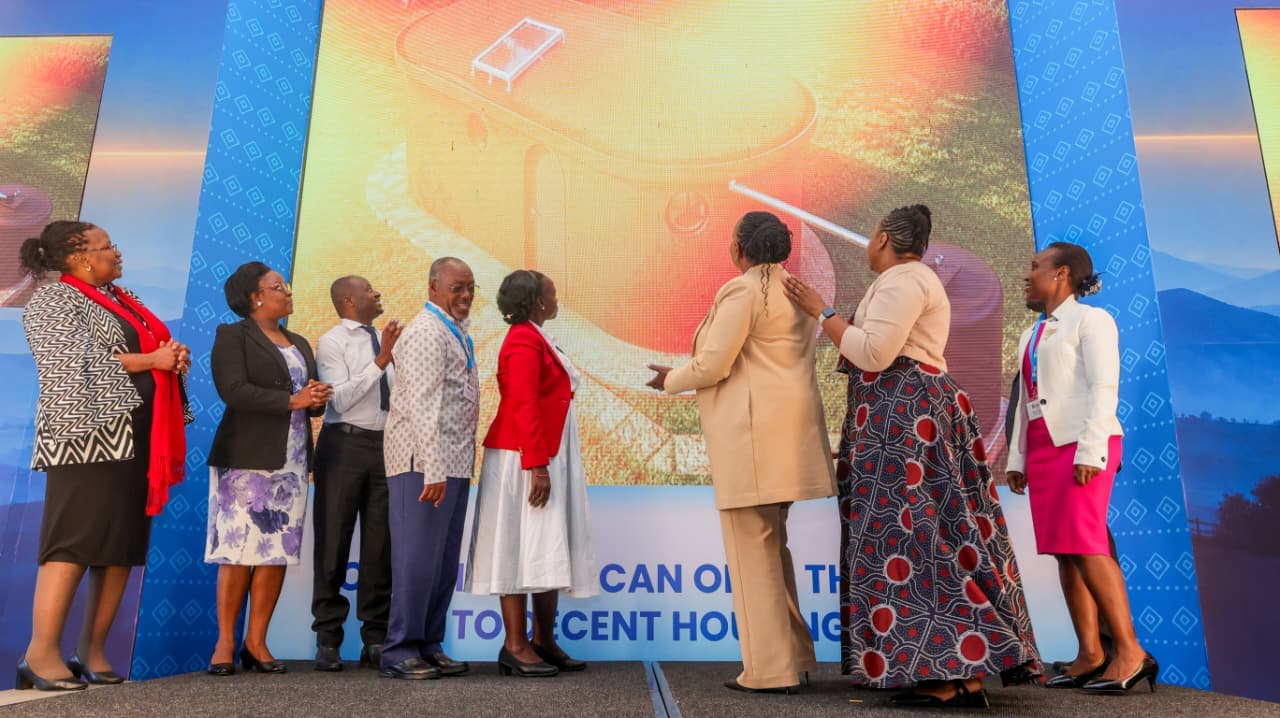
NAIROBI, July 16 – Habitat for Humanity has launched an ambitious campaign to tackle Kenya's housing crisis, unveiling a five-year plan to improve 10,000 homes in jigger-endemic communities while empowering Maasai women to build climate-resilient traditional manyattas.
The "Let's Open the Door" campaign, launched in Nairobi as part of Habitat for Humanity's 50th anniversary celebrations, seeks to redefine housing as more than shelter, describing decent homes as the foundation for better health, economic opportunity, climate resilience and human dignity.
Speaking during the launch, Abi Riak, Area Vice President for Africa at Habitat for Humanity, called for greater investment and collaboration to address Africa's growing housing crisis.
«"Housing matters because a home is the foundation upon which people build their lives, communities build resilience, and countries build prosperity. Through Let's Open the Door, we are calling for greater collaboration, innovation and investment to help scale solutions that can reach millions of families across Africa," Riak said.»
According to Habitat for Humanity, Sub-Saharan Africa faces a housing deficit of 56 million units, with 53 per cent of the region's urban population living in informal settlements. In Kenya, the housing shortage is estimated at two million units, with annual demand exceeding supply by nearly 200,000 homes.
The campaign's first flagship initiative, Opening the Door to Women Building Resilient Manyattas, will support Maasai women in upgrading traditional homes using climate-smart construction techniques while preserving cultural heritage. The second, Opening the Door to Jigger-Free Homes, aims to replace unsafe earthen floors in 10,000 households over the next five years, directly benefiting about 50,000 people by reducing jigger infestations and improving health outcomes.
Habitat for Humanity Kenya National Director Eileen Mokaya said the initiatives demonstrate that housing can be used as a platform to address multiple development challenges simultaneously.
"We are not simply improving houses. We are strengthening women's livelihoods, improving health and learning outcomes, preserving cultural heritage and building resilience to future challenges," Mokaya said, adding that the organisation hopes the programmes will inspire greater investment in scalable housing solutions across Kenya.
Machakos Governor Wavinya Ndeti praised the organisation for transforming lives in her county through housing, water and digital learning projects, saying communities that once struggled now enjoy safer homes, improved sanitation and expanded access to clean water. She noted that Habitat for Humanity has also supported digital education by donating 120 computers to six public schools in the county.
The governor urged development partners, government and the private sector to expand investments in affordable housing, saying the impact already witnessed in Machakos proves that partnerships can transform vulnerable communities.
«"Let us enhance this programme. Let us expand our reach. Let us scale up the collaboration so that thousands of other families still waiting in the shadows can also have their doors opened to dignity and safety," Ndeti said.»
She also pledged Machakos County's support for the development of a county housing policy in partnership with Habitat for Humanity to accelerate access to decent and affordable housing.
The Let's Open the Door campaign is being rolled out in more than 60 countries and aims to rally governments, investors and development partners around the belief that decent housing is central to achieving better health, stronger economies, gender equality and sustainable development.