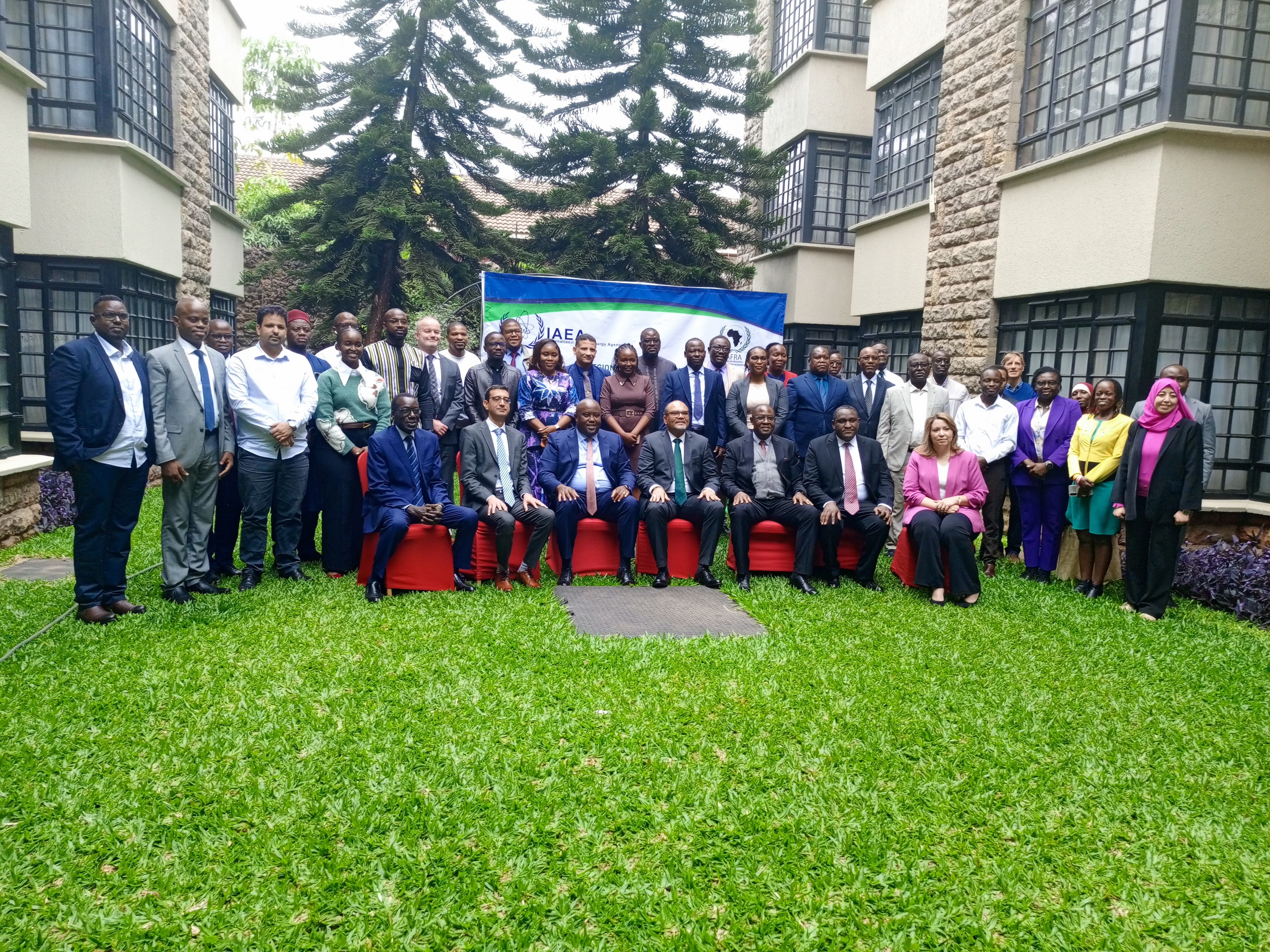
Energy experts, policymakers and scientists from across Africa convened in Nairobi on Monday for the International Atomic Energy Agency (IAEA) Regional Meeting on the Development of Approaches to Climate, Land-use, Energy and Water Systems (CLEWS), with delegates calling for integrated planning to address the continent's growing energy demand while tackling the impacts of climate change.
The meeting, hosted by the Energy and Petroleum Regulatory Authority (EPRA) at Weston Hotel, brought together representatives from African governments, the International Atomic Energy Agency (IAEA) and regional institutions to explore how countries can balance energy production with sustainable management of land and water resources.
Opening the meeting, Principal Secretary for the State Department for Energy Alex Wachira said Kenya is committed to sustainable development and regional cooperation, noting that integrated energy planning is essential as countries seek to expand electricity access, strengthen energy security and transition to cleaner energy systems.
He said the regional forum aligns with Kenya's development priorities and the African Union's Agenda 2063, while providing an opportunity for African countries to exchange knowledge and identify practical solutions for secure, affordable and climate-resilient energy systems.
The discussions focused on the CLEWS framework, an analytical approach that enables governments to evaluate how decisions in the energy sector affect climate, water resources and land use, allowing policymakers to make informed long-term investment decisions.
Principal Secretary for the State Department for Science, Research and Innovation Prof. Abdulrazak Shaukat said Africa must embrace science, innovation and emerging technologies to address interconnected challenges including climate change, food insecurity, water scarcity, rapid urbanisation and energy transition.
He noted that although Africa contributes less than four per cent of global greenhouse gas emissions, it remains among the regions most vulnerable to climate change, making integrated planning and evidence-based policymaking increasingly important.
Prof. Shaukat said Kenya continues to demonstrate leadership in clean energy, with more than 90 per cent of its electricity generated from renewable sources, particularly geothermal energy. He added that the government is also pursuing long-term investments to diversify the country's energy mix as electricity demand continues to grow.
He called on African governments to strengthen investment in science, research and innovation while embracing technologies such as artificial intelligence, geographic information systems, remote sensing and big data to improve planning and decision-making.
The Principal Secretary further urged countries to deepen regional cooperation through knowledge sharing, capacity building and scientific partnerships, saying Africa must develop local expertise capable of driving sustainable development across the continent.
The meeting also examined the continent's future energy needs as Africa's population is projected to reach nearly 2.5 billion by 2050, increasing demand for electricity, food, clean water and infrastructure. Delegates agreed that integrated planning will be critical in ensuring future development is environmentally sustainable and economically viable.
Among those attending the meeting were Acting Director General of the Energy and Petroleum Regulatory Authority Dr. (Eng.) Joseph Oketch, Acting Director General of the National Commission for Science, Technology and Innovation (NACOSTI) Dr. David Ngigi, officials from the International Atomic Energy Agency and technical experts from several African countries.
The regional meeting is expected to generate recommendations that will guide national energy policies, strengthen regional collaboration and support investment in sustainable, affordable and climate-resilient energy systems across Africa.